

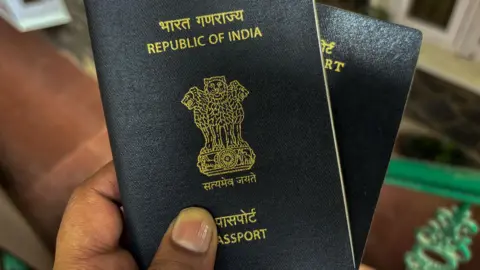
In recent months, an online clip from a popular travel content creator expressing frustration over the limited power of the Indian passport gained massive traction across digital platforms.
He mentioned although nearby nations like Bhutan and Sri Lanka offered easier access of travelers from India, obtaining visas for visiting most Western and European countries remained a challenge.
This dissatisfaction regarding the limited global access of Indian passports was reflected in the latest global passport ranking, which placed India at position eighty-five out of nearly two hundred nations, a decline of five positions compared to the previous year.
Officials in India has not commented on the report so far.
Nations like Rwanda, Ghana and Azerbaijan despite smaller economic size than India – which is the fifth-largest economy globally – hold better positions in the ranking in the seventies range, respectively.
In fact, India's rank over the last ten years has remained in the 80s, even dipping to the 90th spot two years ago. These rankings are dismal when measured against Asian nations such as Singapore, Japan and South Korea, which have consistently held top positions.

Global Passport Power Indicates
Passport strength reflects a nation's soft power and international standing. It also translates into better mobility for its citizens, improving commercial and learning opportunities. Limited passport power means more paperwork, increased visa expenses, reduced travel benefits and longer waiting times for travel.
But despite the drop in position, the number of countries providing visa-free travel to Indians has actually increased in the past decade or so.
For example, eight years ago – the year Prime Minister Narendra Modi's Bharatiya Janata Party (BJP) came to power – fifty-two nations offered visa-free travel to Indians and its passport ranked 76th in the ranking.
A year later, it fell to eighty-fifth place, then rose to 80th in 2023 and 2024, declining once more to the eighty-fifth spot currently. At the same time, visa-free destinations for Indians grew from fifty-two eight years ago to 60 in 2023 and 62 in 2024.
The Competitive Global Mobility Landscape
The count of visa-free destinations this year (57) exceeds what it was in 2015 (52), yet the country's position during both periods remains at eighty-fifth. What explains this situation?
Experts say that a major reason involves growing competition in international travel – meaning countries are entering into more travel partnerships to benefit their citizens and economic growth. According to a 2025 report, the global average count of countries travellers are able to access without visas has almost doubled from 58 in 2006 to one hundred nine currently.
For example, China has increased its count of visa-free countries its citizens can travel to from 50 to 82 over the last ten years. Consequently, its position on the index has enhanced from ninety-fourth to sixtieth during the same time period.
In comparison, India – previously positioned at seventy-seventh place during summer – fell to eighty-fifth place this autumn after losing access to two countries.
Other Influences Affecting Passport Strength
A former Indian ambassador notes multiple elements that affect a nation's passport power, like its economic and political stability as well as its openness to accepting travelers from other countries.
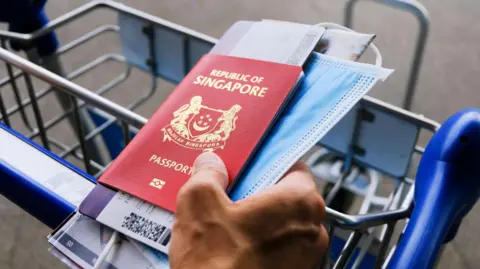
For instance, the US passport has dropped out from the top ten and now occupies the 12th position – a historic low – due to its more inward-looking approach in global affairs.
The former ambassador recalls how in the 1970s, Indians enjoyed visa-free travel to many Western and European countries, though this shifted after the Khalistan movement during the eighties. Later political disturbances have continued to damage at India's image as a stable, democratic country.
"Many countries are growing more cautious of immigrants," he stated. "India has a high number of citizens emigrating overseas or overstaying their visas affecting the national image."
Elements such as how secure of a national passport and its immigration procedures also play a role to obtaining visa-free access to foreign nations.
Security and Technological Improvements
India's passport remains vulnerable to security risks. In 2024, authorities arrested over two hundred individuals for alleged visa and passport fraud. The country also has complex immigration processes with lengthy timelines of visa processing.
The diplomat says that technological advances, such as the newly introduced electronic passport or e-passport, may enhance safety and ease the immigration process. The e-passport contains a small chip holding biometric information, making it harder to forge or tamper with the document.
However, increased diplomatic efforts and travel agreements remain key for enhancing international travel freedom for Indian citizens and consequently, India's passport ranking.

